The science of staying active over 60
By Lexi Marshall
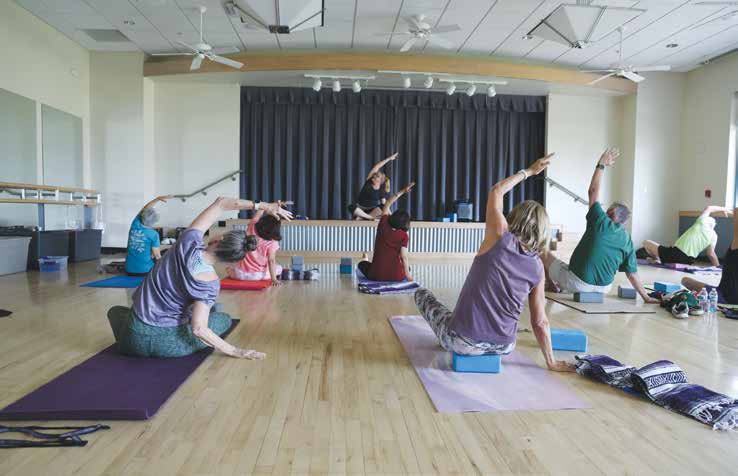
ON ANY GIVEN MORNING at a south Denver recreation center, a class of adults in their 60s, 70s, and 80s works through a circuit of squats, rows, and single-leg balance holds. Nobody is chasing a personal record. They’re chasing something more useful: the ability to carry groceries up a flight of stairs, get off the floor without help, or hike a familiar trail one more season.
Colorado ranks first in the nation for adults 65 and older who meet federal exercise guidelines, at 36.7%, according to 2023 CDC survey data compiled by America’s Health Rankings. Across the Front Range, doctors and fitness professionals are converging on a message that staying active as one ages isn’t about intensity or extremes—it’s about consistency, the right kind of movement, and paying attention to what the body needs, especially in a state where thinner air adds its own wrinkle to the equation.
“Healthy aging is less about being free of every medical condition and more about maintaining function, being able to move well, think clearly, manage daily activities, and remain independent,” says Dr. Eric Yoder, chief medical officer at AdventHealth Porter. He points to physical activity, particularly strength and balance training, as one of the most important levers people have.
“The phrase ‘use it or lose it’ is particularly relevant to healthy aging,” Yoder says. “Strength, balance, and mobility are capacities we need to continue using and challenging if we want to preserve them over time.”
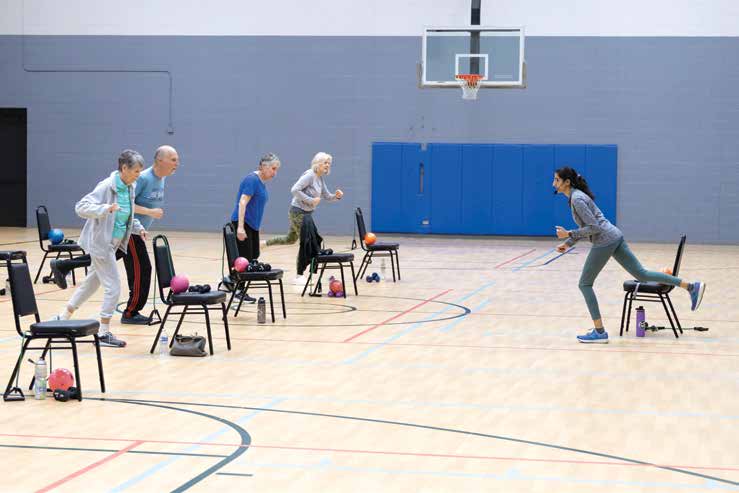
Scott Hansen, fitness coordinator at South Suburban Parks and Recreation, has spent 15 years watching that philosophy play out in classes that include Active Adult Weight Training, SilverSneakers, and Tai Chi. “In time, fitness becomes less about performance and more about preserving function, independence, and quality of life,” he says. His programming leans on strength, balance, mobility, cardiovascular work, and recovery, each scaled to what a given body can safely handle that day.
Yoder cites a general recommendation for adults 65 and older of at least 150 minutes of moderate aerobic activity a week, strength training at least twice weekly, and regular balance work. “Regular exercise improves cardiovascular health, strength, balance, mobility, and physical function, and it lowers the risk of falls and functional decline,” he says. The stakes are concrete: the National Safety Council reports 43,020 preventable fall deaths among Americans 65 and older in 2024, up 51% over 10 years. Yoder emphasizes consistency over specialization, noting the importance of incorporating different types of movement.
For people returning after an injury or a long break, Hansen recommends starting with the movement patterns that mirror daily life: sitting and standing from a chair, stepping, pushing, pulling, hinging, carrying, and reaching. Strength training two to three times a week with light resistance and deliberate technique comes before worrying about load, he says, and balance and mobility work count as essential from day one. Build endurance gradually and change one variable at a time, whether duration, repetitions, resistance, or frequency. Soreness is useful information, but sharp or persistent pain, excessive fatigue, or symptoms that linger are signals to back off.
Yoder offers a parallel warning sign for anyone increasing activity at any age: chest pain or pressure, fainting or near-fainting, unusual shortness of breath, a new irregular heartbeat, or a noticeable drop in exercise tolerance should prompt a stop and a call to a physician.
It’s tempting, in a state defined by its mountains, to assume Colorado’s air itself is doing older adults some kind of favor. The research doesn’t support that. What altitude does change is effort, and mainly for people who aren’t yet used to it.
“Altitude matters most when someone is new to Colorado or travels from the Front Range to higher mountain elevations,” Yoder says. With less oxygen available, a familiar workout can suddenly feel harder. His advice is to increase intensity gradually and give the body time to acclimate when heading to higher ground, and for anyone with significant heart or lung disease to loop in a physician before taking on higher-altitude activity. Headache, nausea, dizziness, or unusual fatigue at elevation, he says, are signs to stop rather than push through.
For most people already living and exercising at their regular altitude,in other words, the science points less to elevation as a driver of better aging and more to the same fundamentals that apply anywhere: move consistently, train strength and balance, and respect the body’s signals. Altitude is a variable to manage carefully during travel or a big elevation gain, not a shortcut to longevity.
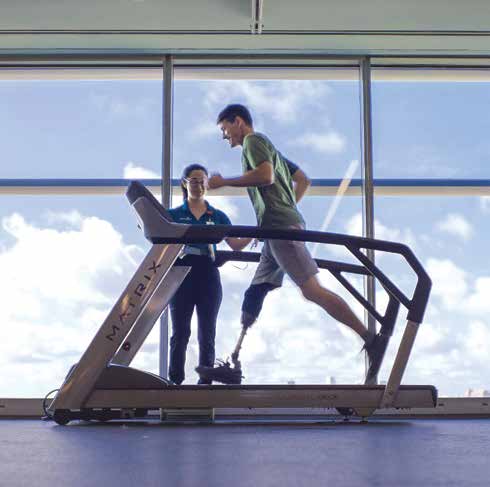
Hansen has heard similar misconceptions on repeat. Aging brings real changes, he says, but much of the decline people chalk up to age is driven by inactivity, and regular exercise can meaningfully preserve strength, mobility, balance, and confidence. He pushes back on the idea that exercise has to be intense to count. Intensity should match the person and the goal, not a fixed standard.
Then there’s the belief that strength training is risky or reserved for the young. Framed correctly, Hansen says, a well-designed resistance program can help support bone health, balance, and independence. As for the fear of getting too bulky, he says a general strength program is likelier to maintain or improve physical ability than to add unwanted muscle.
Neither expert frames exercise as a solitary prescription. Hansen says people stick with movement when it becomes something they look forward to rather than an obligation, and South Suburban’s classes draw patrons of every ability level who return as much for each other as for the workout. “Our patrons are much more than clients,” he says. “We see them as our neighbors, parents, grandparents, and friends.”
The takeaway for Colorado adults over 60 isn’t complicated, even if it runs against instinct. Start with the basics. Train strength and balance on purpose. Build endurance gradually. Pay attention to what the body is telling you, especially at elevation. And do it, when possible, with other people. As Hansen puts it, even a little movement a day adds up, and the nearest recreation center is a reasonable place to start.