
Denver’s oldest standing building
By Lexi Marshall
DENVER’S OLDEST STANDING BUILDING has had more than a century and a half to collect stories.
Some are documented in historical records: the travelers who stopped along the Cherokee Trail, the families who lived on the property, the farm that grew around the original house. Others are harder to explain. Staff members have reported hearing footsteps when no one else was upstairs. Doors have opened and closed on their own. Paranormal investigators have recorded what they believe could be evidence of something beyond the physical world.
At Four Mile Historic Park in Glendale, history and haunting exist side by side, not necessarily as fact and fiction, but as two ways of interpreting a place shaped by generations of human lives.
Four Mile House was built in 1859 by brothers Samuel and Jonas Brantner. The two-story log structure offered services to travelers along the Cherokee Trail, a route that followed an older Indigenous trail through the region. The house was built in violation of the Horse Creek Treaty, which permitted non-Indigenous travelers to pass through the area but prohibited them from stopping to build.
In 1860, Mary Cawker purchased the house and opened an inn. Two years later, it became a stop along the Butterfield Stage Company’s route, earning its name as the last “mile stop” before Denver. In 1864, Cawker sold the property and more than 100 acres to Millie and Levi Booth, who continued operating the stage stop while developing a prosperous farm. The Booths eventually acquired more than 600 acres and added a fashionable brick
Today, Four Mile Historic Park preserves that layered history as a living history museum and working farm. The 12-acre property includes the historic house, farm animals, the reconstructed Bee House, gardens, and other reminders of Colorado’s early settlement.
But spend enough time around an old building and another kind of history tends to emerge.
“Is this place haunted?” is a question Four Mile staff hear regularly, says Allie Matsuo, the park’s manager of programs and education. The answer isn’t simple.
Unlike Colorado’s more famously haunted destinations, Four Mile doesn’t have one dominant ghost story attached to the property. “We don’t have the staff stories that somewhere like the Stanley Hotel or Cheesman Park do,” Matsuo says, “but we also like to think that the folks who lived here were regular people living regular lives who left without much unfinished business.”
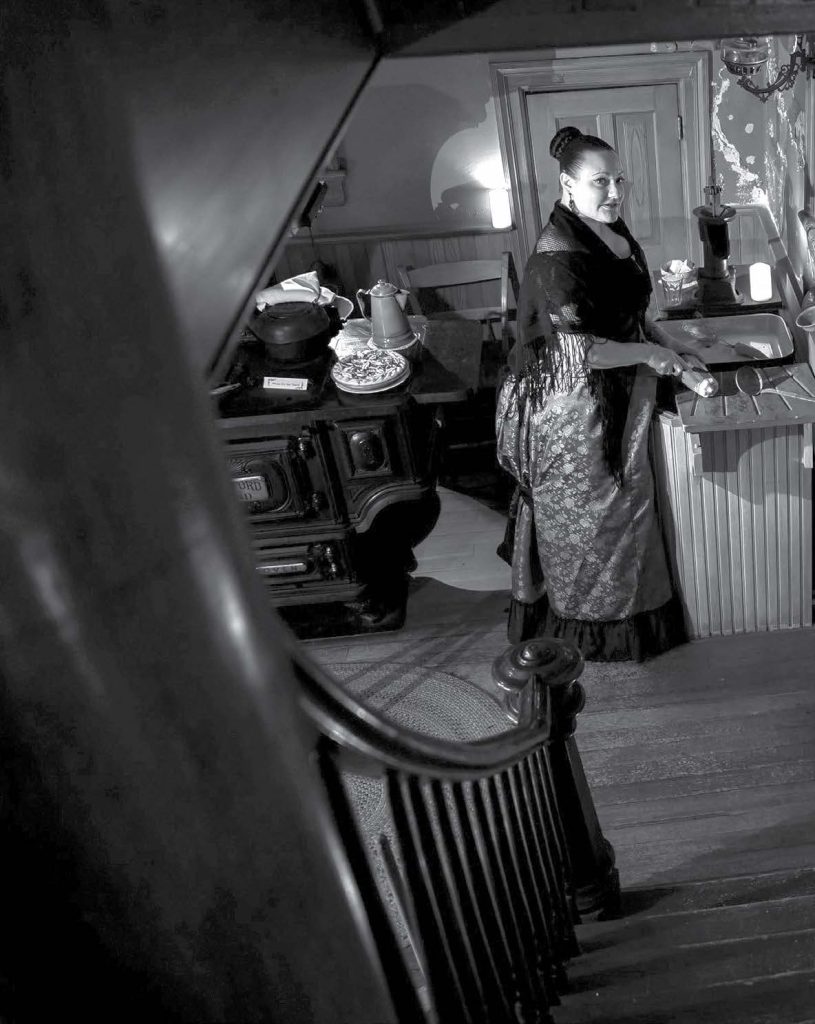
Still, there are moments that leave room for interpretation.
Matsuo says visitors, particularly children and people who consider themselves sensitive to paranormal experiences, sometimes feel uncomfortable in the dry cellar beneath the historic house. For her, however, another location feels more unnerving. “I actually find that the Education Center feels more unsettling,” she says. “When we’re here alone at night, we can hear footsteps upstairs, and our cleaners have captured the automatic doors opening and closing on their own.”
During an investigation with the Mile High Dowsers, participants reported sensing what they described as a “vortex of spirit energy” in an event space. “Every staff member in the room held their breath,” Matsuo says.
None of these experiences constitutes proof of paranormal activity. They are, however, part of the contemporary folklore surrounding the property.
Paranormal investigators have explored Four Mile from basement to attic, looking for their own answers. XX Paranormal Communications, an all-female paranormal team based in Colorado that specializes in investigating historic locations and educating the public about the paranormal, has conducted investigations at the park.
MacKenzie Koncher, the group’s co-founder, says people have reported unusual activity throughout the property. “We usually like to end the night with an investigation in the basement of the cabin because that area seems to be consistently active,” Koncher says. The group has also described a knock in a bedroom that seemed to come from inside a wardrobe, along with other reports from the attic. During one investigation, the group recorded what it interpreted as a particularly unusual sequence involving a flashlight. According to Koncher, a team member asked whether anyone was touching another investigator and, if so, whether they could turn on a flashlight.
“What appears to be an orb comes down from the top left of the screen and goes into the flashlight like a shooting star, and then the flashlight turns on,” Koncher says.
To a believer, it can look like communication. To a skeptic, it may have a more ordinary explanation. The video itself doesn’t settle the question, and that uncertainty is what makes paranormal investigation so compelling to its participants.
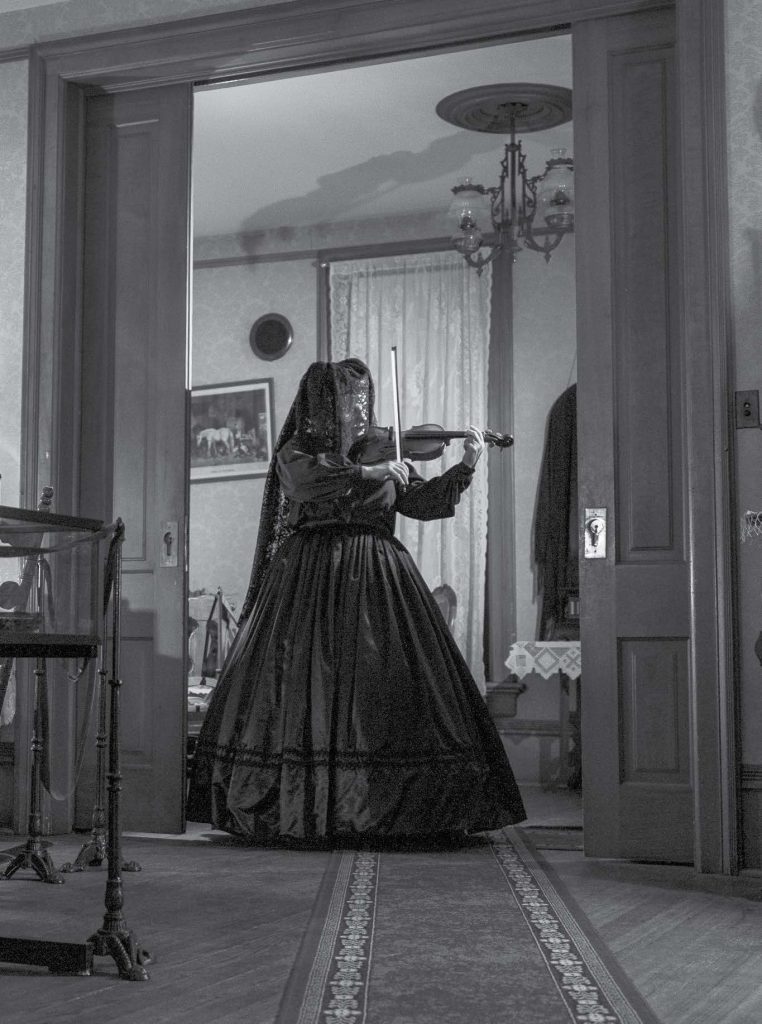
Another investigation produced a different kind of mystery. A member of Way Out West Paranormal repeatedly received the names “Sarah” and “Sadie.” The team later researched a possible historical connection to Sarah Jane “Sadie” Morehouse Likens, who became Denver’s first female police matron and dedicated much of her life to caring for women, children, and veterans.
The identification is intriguing, but it is not evidence that Likens was connected to Four Mile, or that the investigators had communicated with her. Instead, it shows how paranormal investigations can send researchers back into the historical record to find real people and events that might provide context for unexplained experiences.
That interplay between documented history and paranormal lore is part of what makes Four Mile so compelling.
The park is fortunate to have first- and second-hand accounts of life on the property spanning generations. “The descendants of the families who owned the house are still well connected to their personal histories, and to us,” Matsuo says. Even some present-day staff have family ties to the property. One Four Mile tour guide, for example, has grandparents who owned the Four Mile House when he was a child.
That living connection gives the park a way to investigate questions raised during paranormal investigations. Because a staff member always stays behind at the Education Center during formal investigations, the team can’t inadvertently influence what the investigators find in the moment. When researchers wonder whether a particular event could be connected to a baby born at the property, a family member who died there, or another historical event, staff can turn afterward to records and family histories for context.
At the same time, the park doesn’t present paranormal claims as historical fact. “We don’t share the XX Paranormal Communications findings during general tours of the Four Mile House,” Matsuo says. Instead, visitors interested in that side of the property can experience it through specialized events and investigations.
That separation allows the historical record to remain the foundation while giving the unexplained its own space.
And perhaps old places make such compelling settings for ghost stories for this reason: They are already full of people who once lived, worked, celebrated, struggled, and died there.
“Paranormal activity can happen anywhere, and spirits don’t have to necessarily be tied to a location,” Koncher says. “However, Four Mile is particularly compelling because of all of the historic events and people who passed through.”
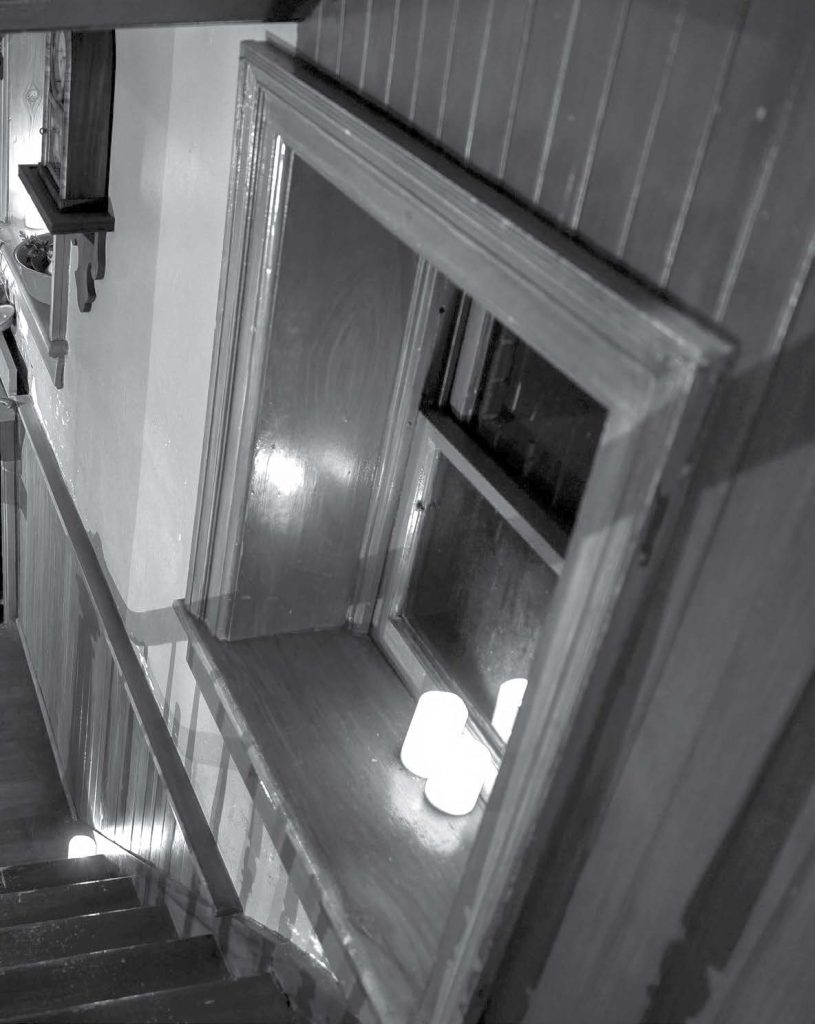
Four Mile’s history is literally layered into its architecture. The original 1859 log structure was expanded over the decades, including the Booths’ 1883 brick addition. What stands today is not a frozen snapshot of one moment in time, but a physical record of generations of change.
Colorado is full of places with similarly layered histories, and the ghost stories that accompany them. Mining towns, hotels, homes, hospitals, theaters, and former settlements have all accumulated tales of apparitions and unexplained occurrences. Whether those stories represent supernatural encounters, coincidence, imagination, or some combination of the three, they become part of a place’s cultural memory.
At Four Mile, history comes first. But this October, the park is making room for the mysteries, too.
On Oct. 24, Four Mile will host its annual Spirits & Spirits, a 21-and-over celebration inspired by Victorian spiritualism and nightlife. The evening includes access to Bright Nights, live DJ sets, drag performances, spirit tastings, campfire stories, a Victorian mourning ceremony demonstration, and an insect-pinning demonstration. On Halloween, Oct. 31, XX Paranormal Communications will lead an after-dark investigation of the park and historic buildings, with special guest Christopher Brewer, a paranormal investigator and author. The sold-out event runs from 7:30 to 11 p.m. The group returns in 2027 with its first investigation of the year on Valentine’s Day weekend.
On Friday, Nov. 13, Four Mile hosts illusionist Mark Weidhaas for Colorado Spirits: Stories, Tales, and Legends from Haunted Places in Colorado, a large-scale séance experience the park is bringing to the property for the first time this year.
For those willing to spend an evening among Colorado’s oldest surviving stories, Four Mile offers something more interesting than a simple haunted-house experience. It offers a chance to walk through a real piece of Denver history, then decide for yourself where the documented past ends and the unexplained begins.
Whether or not you believe a historic building can hold onto its ghosts, there is something undeniably haunting about standing in a place where generations of people have already stood and knowing their stories are still being told