
Denver’s farms, food rescuers, and composters are building a more sustainable city
By Lexi Marshall
SOMEWHERE BETWEEN a hydroponic greenhouse and a gleaning crew hauling apple crates through a local neighborhood, the Mile High City is quietly rethinking its relationship with food. Not in a grand, policy-document kind of way—though that is happening, too—but in the practical, season-by-season work of people who believe the distance between a garden and a kitchen table should be as short as possible.
The city faces real pressure. Colorado’s Food Bank of the Rockies reports hunger has reached a 10-year high, with nearly 13 percent of the state’s population experiencing food insecurity. At the same time, the USDA estimates that between 30 and 40 percent of the U.S. food supply is wasted every year. The people working at the intersection of those two facts—growers, gleaners, and composters—are trying to close that gap one harvest at a time.
GROWING LOCAL
James O’Brien revived Rebel Farm in 2023 to solve a problem he couldn’t stop thinking about: the produce in most Denver kitchens had already traveled hundreds, sometimes thousands, of miles before anyone touched it. His answer was a 15,000-square-foot greenhouse within Denver city limits, using a hydroponic method called the Nutrient Film Technique, in which a thin stream of nutrient-rich water flows continuously over plant roots, then is captured and recirculated. There’s no soil erosion, minimal runoff, and very limited need for chemical inputs. Greens harvested at Rebel Farm typically travel fewer than 25 miles to reach a kitchen.
For a city where winter temperatures can swing wildly, controlled-environment agriculture also solves a reliability problem. “During winter months, most leafy greens are shipped from California or Arizona,” O’Brien says. “That creates dependence on distant weather patterns, fuel prices, and transportation networks.” His greenhouse harvests just as reliably in January as in July—offering local restaurants and consumers consistent quality year-round and keeping more food dollars circulating within Colorado’s economy.
“As climate pressures increase and water becomes more precious in the West, controlled-environment agriculture allows us to grow more with less,” he says. “Hydroponic systems use a fraction of the water required in field production and can operate on smaller footprints inside city limits. But resilience isn’t just about production, it’s about access. Urban farms have the potential to partner with schools, nonprofits, and community programs to expand access to fresh, nutrient-dense food.”
O’Brien sees Rebel Farm as part of a broader shift toward a more diversified, localized food system—one that’s cleaner, more efficient, and more connected to the communities it serves.
HARVESTING WHAT’S ALREADY HERE
Not all of Denver’s food recovery work starts in a greenhouse. Some of it starts in someone’s backyard, under a heavily laden apple tree.
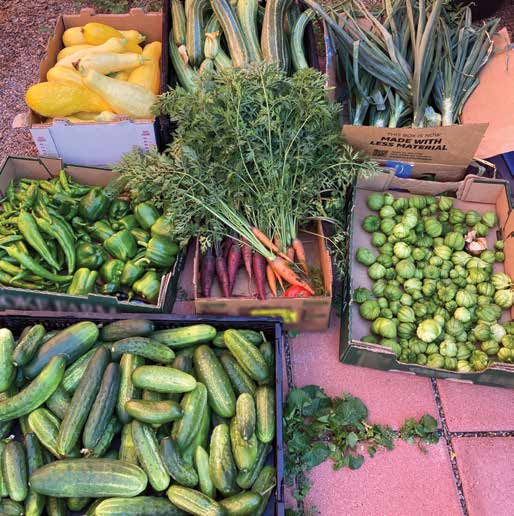
Grow Local Colorado, a nonprofit managing 19 community gardens across the Denver metro area, recovered nearly 12,000 pounds of fruit through gleaning in 2025—and co-director Barbara Masoner estimates that represents just 10 percent of the fruit actually available in the area. A tree owner contacts Grow Local when fruit is ripe, a crew of at least five volunteers shows up with equipment and crates, and the harvest goes to nearby food relief organizations. Slightly blemished fruit goes to schools and nonprofits for applesauce and other simple preparations; Grow Local also hosts cider-making events in the fall.
“Food that ends up in a landfill creates methane gas, one of the most potent greenhouse gases,” Masoner says. “By diverting thousands of pounds of fruit annually from the waste stream, we are reducing methane emissions from the landfill.”
Masoner is deliberate about what gets grown in the gardens, too. Before each season, her team asks partner food pantries what their clients actually want. “Though kale and chard are easy to grow, not that many people like them,” she says. “We also want to provide food relevant to the community’s culture.” Harvests are timed to pantry distribution days and delivered through partnerships with Blue Shed Urban Gardens and Fresh Food Connect to ensure peak freshness.
“There is enough food in our country to feed everyone,” Masoner says. “The issue is how to equitably distribute it. We’re providing one piece of that puzzle.”
CLOSING THE LOOP
If gleaning and urban farming represent the front end of a more sustainable food system, composting is what happens at the other end—and Noah Kaplan, executive director of Compost Colorado (CoCo), will tell you it may be the most important part of all.
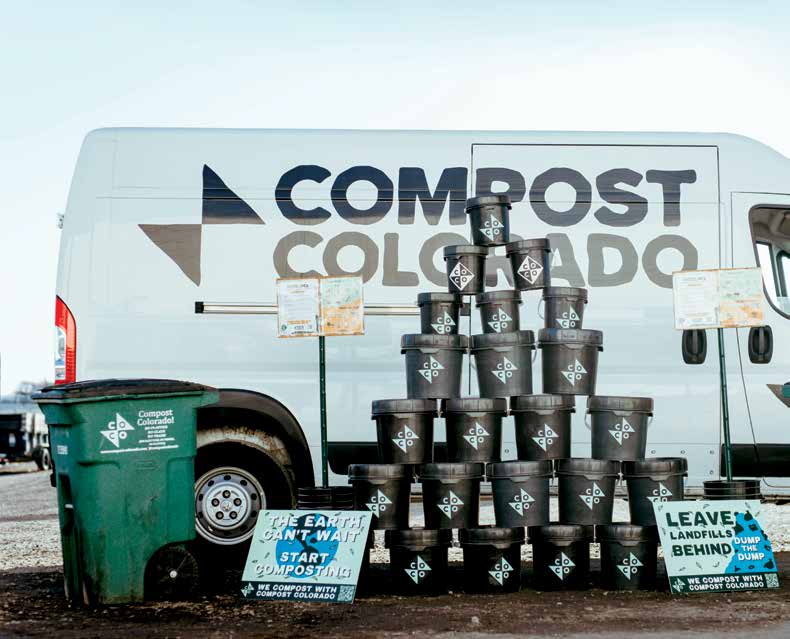
Founded in 2018, CoCo operates 60 drop-off locations across the Denver metro area, accessible 24/7, plus weekly or biweekly curbside pickup for residential members. Monthly fees range from around $5 for drop-off access to $40 for larger curbside containers. On the commercial side, CoCo works with restaurants and businesses pursuing sustainability certifications, scaling service from 64-gallon containers up to full dumpsters.
CoCo’s composting facility—now operational within Denver city limits—keeps collection vehicles from hauling organic material 50 or 60 miles to a distant processing site. The finished compost is returned to local members for their gardens and yards, creating what Kaplan calls “a tight waste loop.” The facility operates in the 80216 zip code, an area with a long industrial history and significant soil contamination. Kaplan sees local compost as part of the remedy. The decomposition process neutralizes some dangerous compounds, organic material dilutes existing toxins, and healthy soil allows you to water about half as often as you would on untreated ground.
“When you compost, you’re trapping carbon in the ground,” Kaplan says. “If we all did it, we could actually see a sizable impact on the atmosphere—pulling carbons out of a cycle that would otherwise have them end up off-gassing and instead putting them into the ground where they become useful to plants and animals.”
Healthy soil, he explains, is the foundation for everything—from the vegetables in your backyard to the trees lining your street.
“Every day we do it, our members grow in their commitment to this,” Kaplan says. “It creates more optimism and more agency.”
POLICY MAKING IT POSSIBLE
All of this scales when policy creates the conditions for it. Denver’s Waste No More ordinance requires businesses and property managers to offer composting services to their tenants and employees—a significant mandate that Kaplan sees as a major opportunity, contingent on thoughtful implementation.
“It’s all well and good to write a law,” he says. “It’s a whole other thing to figure out how to implement it and support people in being observant to it.” He hopes the city will pair the ordinance with real incentives and subsidies to help businesses launch programs.
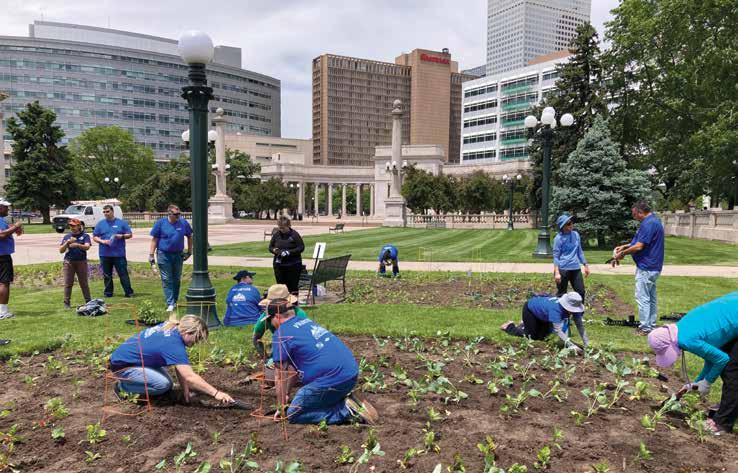
At the state level, Producer Responsibility legislation would require packaging producers to contribute to the cost of processing the material—potentially making composting more financially viable at scale. Meanwhile, community gardens like Grow Local’s depend on a quieter form of civic support: public land access, water infrastructure, and neighborly buy-in.
“When neighbors see our efforts and know the food is going to those in need, they become our advocates,” Masoner says.
“People are really hungry for feeling a part of building a more sustainable future,” Kaplan adds. “Composting is such an exciting opportunity to engage in that practice every day.”
In a city working out how to feed itself better, that spirit—practical, communal, quietly optimistic—may be the most essential ingredient of all.
REBEL FARM
rebelfarm.com
GROW LOCAL COLORADO
growlocalcolorado.org
COMPOST COLORADO
compost-colorado.com