
Uchiko Cherry Creek brings the heat
By Lexi Marshall
CHERRY CREEK ISN’T EXACTLY short on upscale dining, but Uchiko brings something different to the mix: fire. You notice it immediately. The second the door opens, there’s a curl of woodsmoke in the air—warm, a little intoxicating, and just unfamiliar enough to make you pause. It sets the tone before you even reach your table.
The restaurant, which opened in February in the striking black building that once housed the Ginny Williams Gallery, leans into a more elemental, hearth-driven approach to Japanese cuisine—one that feels both refined and deeply rooted.
The concept comes from Tyson Cole, the James Beard Award–winning chef behind the acclaimed Uchi. With Uchiko (literally “child of Uchi”), Cole explores what happens when flame becomes the focal point. The result is a menu that leans into smoke, char, and depth, while still honoring the precision and restraint of Japanese technique.
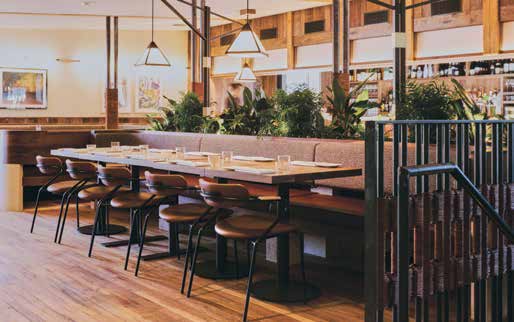
At the Cherry Creek outpost, that vision is brought to life by chef de cuisine Andres Araujo, whose resume spans some of the world’s most respected kitchens. After five years with Uchi’s RiNo team, Araujo now leads Uchiko’s kitchen with a steady hand, balancing flavor with clean composition.
Dining at Uchiko is about discovery—but the layered menu and small portions can feel slightly intimidating at first glance. For those who prefer to hand over the reins, Uchiko offers multiple guided tasting options. A traditional 10-course omakase delivers a curated progression of the kitchen’s standout dishes, while the more flexible somakase experience invites conversation. Guests can share ingredient preferences and curiosities, allowing the culinary team to tailor a personalized menu in real time.
The hearth-grilled nigiri is where Uchiko really shows off. Skip the expected raw salmon belly and lean into the kitchen’s strengths. The gyutoro, made with 72-hour Westholme wagyu, delivers a depth of flavor that lingers; the nasu, a Japanese eggplant, turns silky with a subtle, smoke-kissed richness; and the locally sourced altius mushroom confit is earthy and quietly exceptional. These are the bites that make the strongest case for what Uchiko is really doing.
That same commitment to warmth and intention carries through the hot tastings. The take nabe—a composed bowl of seasonal mushroom, koshihikari rice, and farm egg—is the kind of dish that reads simply on paper and arrives with unexpected depth. Equally persuasive is the Japanese sweet potato, plated with crème fraîche, brown butter, and a nori vinaigrette. Both dishes reflect the menu’s broader strength: coaxing maximum flavor from ingredients through technique rather than excess. It’s notably inclusive, with a variety of plant-based dishes that feel just as considered and complex as their counterparts—an often-overlooked strength in restaurants of this caliber.
The kitchen refuses to coast on dessert. The dairy-free sundae, built on banana, coconut, and caramel, is bright and satisfying without leaning on novelty. The cheesecake, infused with calpico, mandarin, and yuzu, walks a precise line between richness and citrus lift. And the milk and cereal, a composed plate of fried milk, chocolate mousse, and toasted milk ice cream, is the kind of nostalgic finale that earns the table’s attention long after the savory courses have settled.
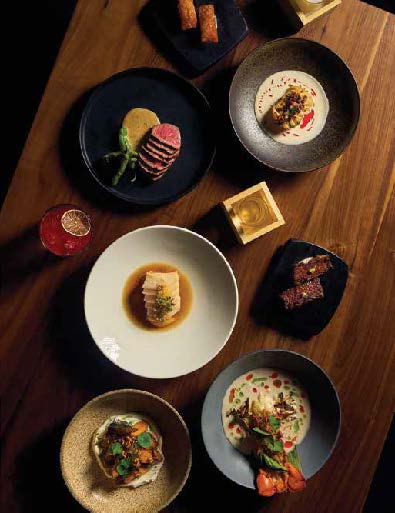
For those looking for a more casual entry point, the daily happy hour, running from 4 to 6 p.m., is an ideal way to sample the menu’s creativity at a more accessible price point, paired with a thoughtfully crafted cocktail, sake, or glass of wine.
In a dining scene that continues to evolve, Uchiko doesn’t just add another reservation to the list—it offers a shift in perspective. Here, fire is the throughline, the mood, and the memory guests take with them long after the last course.