How CMDance brings discipline, community, and cultural tradition into Colorado classrooms
By Kastle Waserman
Dance, at its highest level, is discipline disguised as joy. It is history carried in rhythm, etiquette communicated without words, and confidence built one measured step at a time. For Caryn Carrasco, that idea became the foundation of CMDance, which she founded in 1999 with the belief that culturally rich, socially rooted dance traditions should not be limited to professional stages but instead brought directly into classrooms across the Denver metro area. What began as an effort to introduce internationally recognized performers to Colorado has grown into a nonprofit organization focused on delivering structured dance education rooted in vernacular jazz, Latin traditions, hip-hop, and social partner forms to students and communities.
Carrasco recalls that at the time, many of these styles—such as Argentine tango and Lindy Hop—were being performed globally as “street dances,” and she saw an opportunity to bring those artists and their expertise to Denver. Through events and workshops, CMDance connected local audiences with renowned performers, creating opportunities for hands-on learning. Even as digital platforms like YouTube and TikTok have made dance more visible than ever, Carrasco emphasizes that virtual exposure cannot replace the value of shared physical space and in-person instruction, where learning happens through direct interaction and community.
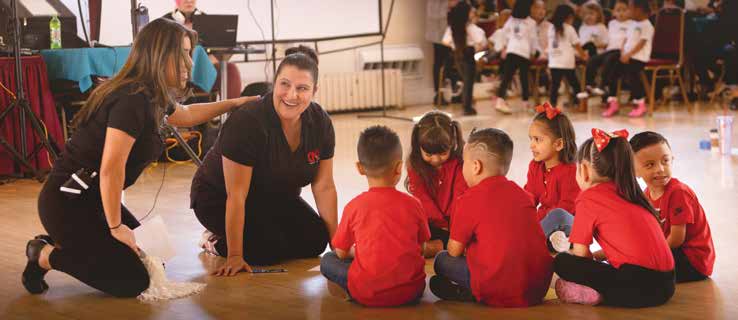
Today, CMDance operates by integrating directly into schools and community settings rather than relying on a single studio space. The organization offers programs for students from pre-K through high school, as well as adults, tailoring each experience to the needs, funding, and structure of individual schools. Some programs last an entire academic year, while others are shorter intensives. In addition to instruction, CMDance provides performance training and choreography when requested, while adult programming and ticketed events help support the nonprofit’s school-based initiatives.
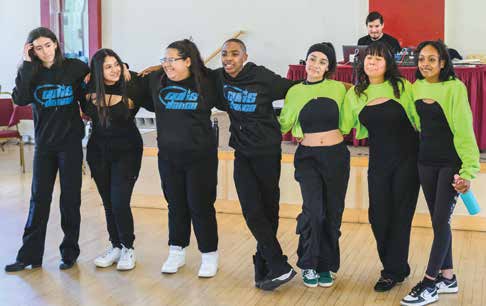
Behind each program is intentional coordination between educators, artists, and communities. Carrasco explains that successful programming requires balancing vision with practicality, from understanding what participants are interested in to determining funding and logistics. She describes it as a creative process in itself, requiring people who can make meaningful impact in classrooms while adapting to different environments and needs.
The benefits of structured dance education, according to Carrasco, extend beyond movement. Physical activity supports health and coordination, while partner-based work fosters communication, awareness, and connection with others. Performance builds confidence and composure, helping participants step outside of their comfort zones. She notes that dance can also help individuals release rigid thinking patterns and connect more freely with others through shared movement and expression.
CMDance became a 501(c)(3) nonprofit to ensure long-term sustainability and accessibility, a decision rooted in Carrasco’s personal connection to social dance. She was inspired by her parents, who met dancing at the Aragon Ballroom in Chicago and experienced firsthand how social dance created community, friendship, and joy throughout their lives.
For students involved in CMDance, the impact is often gradual but meaningful. Participants describe gaining confidence, discovering new abilities, and finding opportunities they never expected, including internships and skill development such as grant writing. These experiences reflect the organization’s broader mission: to help students feel capable, connected, and present in the moment through movement.
Through CMDance, dance becomes more than performance or recreation. It becomes cultural literacy and a shared language—one that fosters connection, self-expression, and community through structured, embodied experience.